ServicesWell Water Filtration
Well Water Filtration in Long Beach
A private well sends water to your taps that never passed through a treatment plant, so sand, iron or a sulfur smell can show up where city water rarely has them. We match each filter stage to what your well delivers, explain it plainly and tell you what upkeep to expect.
What well water filtration does for your home
Well water skips the treatment plant. Whatever the ground puts into it, from fine sand to dissolved iron, manganese and hydrogen sulfide, reaches your faucets unless something stops it where the water enters the house.
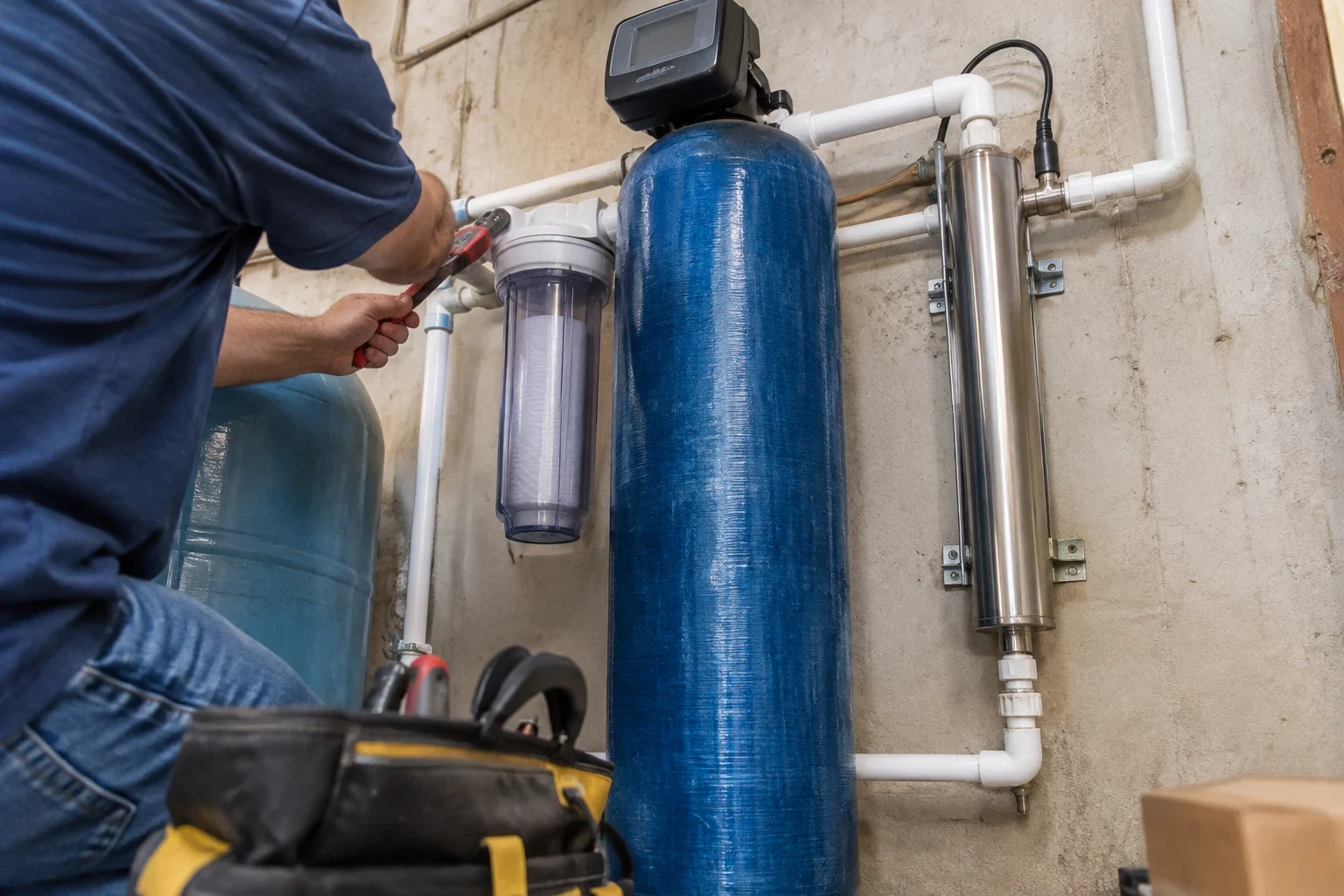
Our job is to put the right stages in the right order. Usually that means a sediment filter first to catch grit, then a media stage for iron, manganese or odor, and carbon to finish the taste. For cooking and drinking, many well owners also add an under-sink reverse osmosis unit at the kitchen.
Most homes around Long Beach run on city water, so a well setup is its own kind of job. If your home is on city supply instead, our City Water Filtration page is the better fit.
What the work includes
- A look at your well setup
- We check where the line leaves the pressure tank, the pipe size and the space available. That tells us where the filters can go and how large they need to be.
- Sediment prefiltration
- A sediment stage catches sand and silt before they reach the rest of the system. It protects your fixtures, your appliances and the filters downstream.
- Iron, manganese and odor reduction
- Orange or black staining and a rotten-egg smell call for a media filter built for those minerals and gases. We size it to your household's water use so pressure stays steady.
- Carbon for taste
- A carbon stage smooths out earthy or metallic taste. It is usually the part families notice first, right at the glass.
- Bypass valve and a clean install
- We add a bypass so water keeps flowing if a filter ever needs service. We protect the floor around the work area and take the packaging and old fittings with us when we leave.
- A walk-through of upkeep
- Before we go, we show you how to change cartridges, how often to expect it and what a filter that needs attention looks like.
Signs your well water needs filtering
Grit in faucet screens
Sand or silt collecting in aerators and toilet tanks means sediment is getting through. Over time it also wears down valves and appliance parts.
Orange or brown stains
Rust-colored rings in sinks, tubs and toilets usually point to iron. Laundry can pick up a yellow tint too.
Black specks or gray staining
Dark marks often come from manganese. It builds up inside pipes and can break loose in bursts.
A rotten-egg smell
That odor is typically hydrogen sulfide gas. It tends to be stronger from the hot tap and after water has been sitting overnight.
Water that changed after rain or well work
New cloudiness or an odd taste after heavy rain, a pump replacement or other well repairs is worth paying attention to. It can mean something in your supply has shifted.
How a well filtration job runs
- 1
Start with a call
Let us know what has been bothering you about the water, from stains and grit to an odd smell or taste. Mention how many people live in your home and anything you already know about the well. We give you a straight read on the likely cause.
- 2
A visit to see the setup
We look at the well line, the pressure tank and the plumbing where the filters would sit. Then we explain which stages make sense, which you can skip, and give you the quote.
- 3
Install day
Installation usually happens in one visit. We shut the water off for a short stretch, plumb in the filters and bypass, then flush the system so loose media dust clears before you use it.
- 4
Checking it together
We run the taps with you, check the pressure and go over the maintenance schedule. You leave the day knowing what you have and what it needs.
What moves the cost
Well systems vary more than city water setups because no two wells are alike. Two things set the price: the grit and minerals your well delivers, and the volume of water your household draws each day. We offer free install (we cover the cost), so the number you hear is about the equipment, not the labor.
- What your water carries
- Sediment alone needs a simpler system than sediment plus iron plus sulfur. Each problem you want handled can add a stage.
- Household size and flow
- More bathrooms and more people mean a higher flow rate. Larger tanks and housings keep pressure up, and they cost more.
- Space and plumbing
- A tight equipment area, older pipe or a long run from the pressure tank can change the parts list.
- Drinking water add-ons
- A reverse osmosis unit at the kitchen sink is a separate line on the quote. Some homes want it, others are happy with the main system alone.
- Ongoing filter changes
- Cartridges and media wear out faster when the water is heavy with sediment or iron. We tell you up front what replacements involve so upkeep is never a surprise.
Well water filtration questions
Something not covered here? (562) 566-3225
Can one filter handle everything in my well water?
Rarely. Sediment, iron and sulfur each need a different kind of media, so most well setups use two or three stages in a row. We will tell you which ones your water calls for and which would be money spent for nothing.
Will filtration lower my water pressure?
When the housings are sized for your household, you should not feel much difference at the shower or the sink. If pressure does sag, the usual culprit is a filter too small for the flow or a cartridge that is overdue for a change. We match the equipment to how much water your home uses and show you when to swap cartridges.
Does well water filtration make my water safe to drink?
It handles what it is built for: sediment, iron, manganese, odor and taste. It is not a fix for every possible contaminant, and we will be clear about what your setup does and does not cover. For drinking and cooking, many well owners add an under-sink reverse osmosis unit as an extra layer.
How is this different from dual tank water filtration?
Dual Tank Water Filtration is one style of system, with two media tanks working together. Depending on what your well puts out, it may be part of the answer for your home. We walk through the options on the call so you can compare them side by side.
How much upkeep should I expect?
Sediment cartridges are the part you change most often, more so if your well runs sandy. Media tanks last much longer. We leave you with a simple schedule, and you can call us whenever a question comes up.
Find out what your well water needs
Tell us what is coming out of your taps and we will give you a straight answer about the setup that fits. We work with homes across Long Beach and nearby towns like Lakewood, Signal Hill and Cerritos.