ServicesReverse Osmosis
Reverse Osmosis in Long Beach
Tap water that tastes like a pool, or a garage stacked with bottled water cases, is an easy fix. An under-sink reverse osmosis system puts filtered water at its own faucet. We give you straight answers on what it takes out, what owning one costs and whether your kitchen suits it.
How reverse osmosis works and when it fits
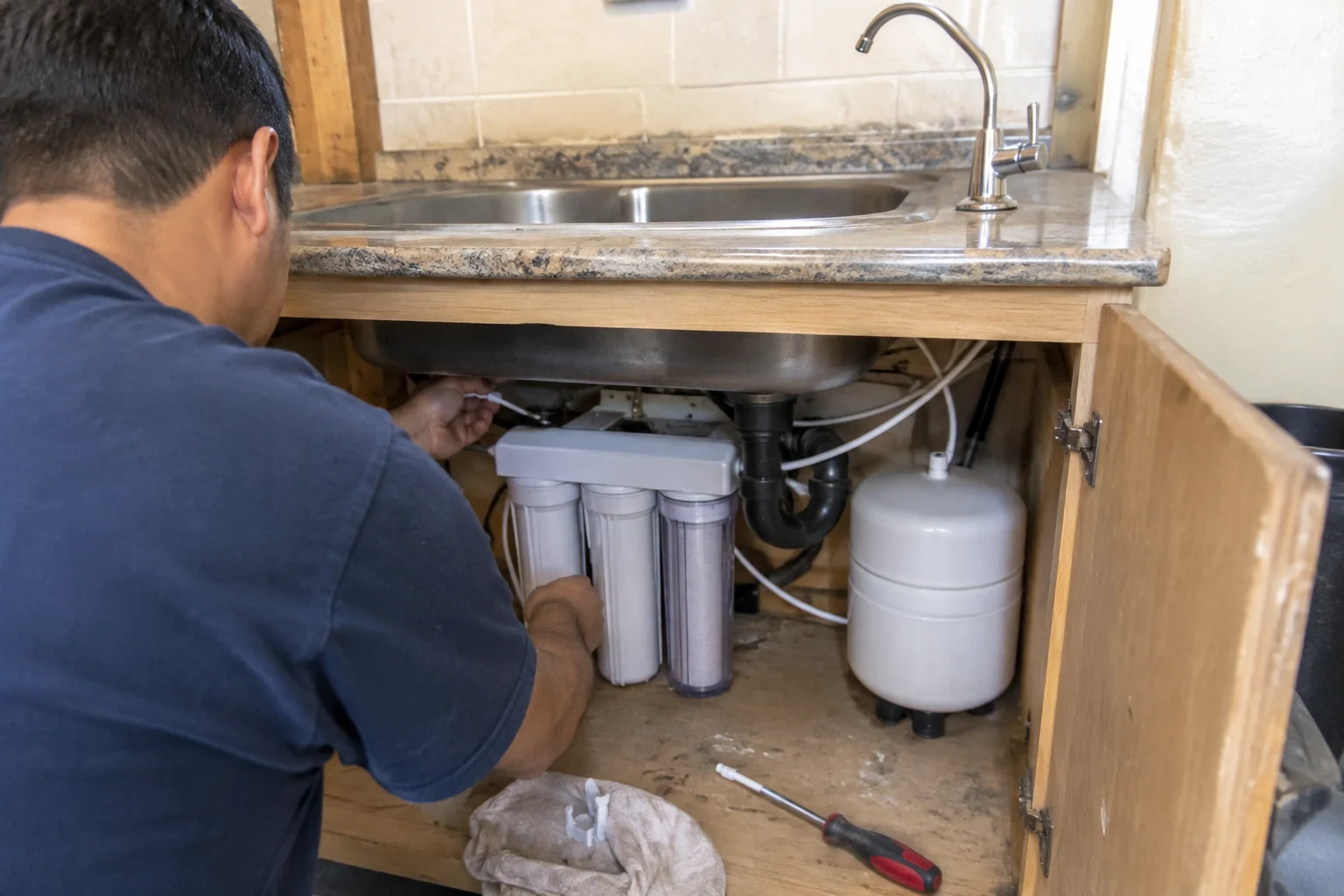
A reverse osmosis system forces water through an extremely fine membrane. The water gets through, and most dissolved salts, metals and other tiny particles are held back. Ahead of the membrane, a sediment filter traps grit and a carbon filter removes chlorine, which would otherwise harm the membrane. The filtered water waits in a small tank under the sink and comes out of a separate faucet on your counter.
Choose RO when the water you drink and cook with matters most to you. It does not supply your shower or washer, and it does not solve every water issue. If the chlorine smell all through the house is the real complaint, start with our City Water Filtration page instead. We would rather say so on the phone than put in a system that does not fix the problem.

What comes with a reverse osmosis install
- 01
Sediment and carbon prefilters
These protect the membrane and clear out chlorine taste and odor. Some city systems treat water with chloramine instead of chlorine, so we pick a carbon stage that can handle it.
- 02
The RO membrane
Most dissolved solids stop here, including lead that can come from older pipes and fittings inside your home.
- 03
Storage tank and its own faucet
The tank fits inside the cabinet and holds a few gallons ready to pour. The faucet goes into an unused hole on your sink, or we drill a new one through the countertop when needed.
- 04
Drain connection
While it filters, the system sends some water to the drain. We connect it to your sink drain with a proper fitting so it stays quiet and leak-free.
- 05
Optional remineralization or fridge line
A last stage can add back a touch of calcium and magnesium for taste. We can also run a line to your refrigerator, so the ice maker and water dispenser pour filtered water too.
Questions about Reverse Osmosis?
Call(562) 566-3225Signs an RO system is worth a look
Your water tastes or smells like chlorine
Treated city water is safe to drink, but many people dislike the taste. If you chill it or mask it with flavoring, a filtered faucet changes that.
You buy bottled water every week
Cases of bottles add up in money, trunk space and recycling. An RO faucet replaces most of that.
White spots on your kettle and glasses
Those spots are dissolved minerals left behind as water dries. RO removes most of them from your drinking water.
Your home has older plumbing
Many homes around Long Beach still have original pipes and fittings. RO is a solid extra layer for the water you drink.
Coffee and ice never taste quite right
Off flavors in tap water show up fast in coffee, tea and cloudy ice cubes.
How the job goes
- 1
A phone conversation first
You describe what you dislike about your water and how your sink cabinet is set up. We give you an honest read on whether RO fits or if another option suits you better.
- 2
A look under your sink
We check cabinet room, the cold supply line, the drain, any disposal and what your countertop is made of. Those details decide where the tank sits and how the faucet goes in.
- 3
Install day
We close the cold supply, hang the filter housings, fit the drain connection and mount the faucet. Most kitchens are usable again before we leave, and we clean out the cabinet when we finish.
- 4
Flush and walk-through
We run off the first tanks of water to rinse the new filters. Then we show you the signs of a clogging filter, when each one is due and where the shutoff valve is in case you need it.
What sets the price of your RO system
Installation is free because we cover that cost, so you are not paying for labor. What you pay depends on the equipment you choose and what your sink area needs for a clean setup. We go over each part on the phone so nothing on the bill catches you off guard.
- Tank or tankless
- A system with a storage tank costs less. A tankless unit runs on a built-in pump and gives you back cabinet space, and that convenience raises the price.
- Added filter stages
- A remineralization stage or a second carbon polishing filter adds a little to the cost. Both shape how your water tastes.
- Refrigerator or ice maker hookup
- Running filtered water to your fridge takes extra tubing and connectors. A fridge across the kitchen needs a longer line than one right beside the sink, so distance matters.
- Water pressure in your home
- The membrane fills the tank at a good pace only with steady pressure behind it. If your pressure is on the low side, the setup may need a booster pump.
- Replacement filters over time
- Plan on new prefilters about once or twice a year and a new membrane every few years. We tell you that ongoing cost up front, before you decide.
Common reverse osmosis questions
Is reverse osmosis wasteful with water?
A portion of the water is sent to the drain. That is how the membrane cleans itself, and it is part of how every RO unit works. Today's systems send off far less than the older ones people picture. Since it feeds only your drinking faucet, most homes see little change on their water bill.
Does my regular kitchen faucet slow down?
No. Your main faucet runs just as it does now. Filtered water comes from a separate, smaller spout made to pour a bit slower.
Will RO remove minerals my body needs?
It removes most dissolved minerals, yet food, not tap water, supplies most of the minerals people get. If you prefer a bit of mineral taste, a remineralization stage adds back some calcium and magnesium.
Will RO fit under a sink with a garbage disposal?
Usually, yes. We arrange the tank and filter housings around the disposal and drain pipes so everything stays reachable. For a very tight cabinet, a tankless unit takes up much less space.
How does RO differ from City Water Filtration?
They solve different problems. RO delivers very clean water at a single faucet for drinking and cooking. City water filtration targets chlorine taste and odor across more taps in your home. Tell us what bothers you about your water and we will steer you to the right one.
Ready for better water at the kitchen sink?
Describe your water and your kitchen, and we will tell you plainly whether RO is a good fit and what it costs to own. We work in Long Beach and nearby towns such as Lakewood, Signal Hill and Seal Beach.